

GUEST LIST: Joel Cusumano
Fabrizio de André, Talk Talk, Tamao Koike, Franco Battiato, Failure, Apogee & Perigee

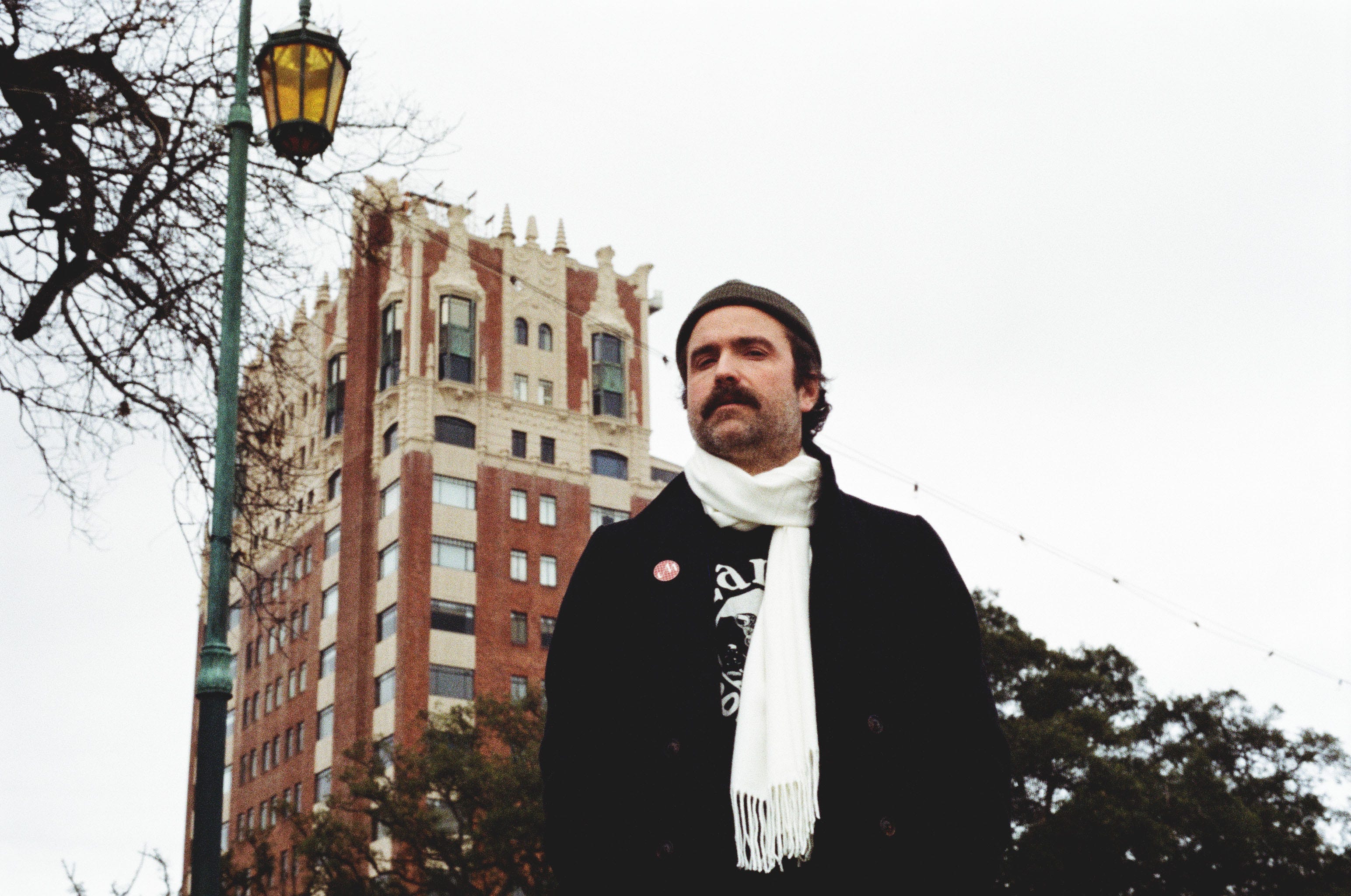
Photo by Corey Poluk
Hello, children. Once upon a time there was a thing called Tumblr. It was mainly a pornography site that specialized in shipping Marvel characters, subtitled stills from anime films and the show Supernatural, and plain text titles of books. It was like Xanga on Viagra and we all loved it.
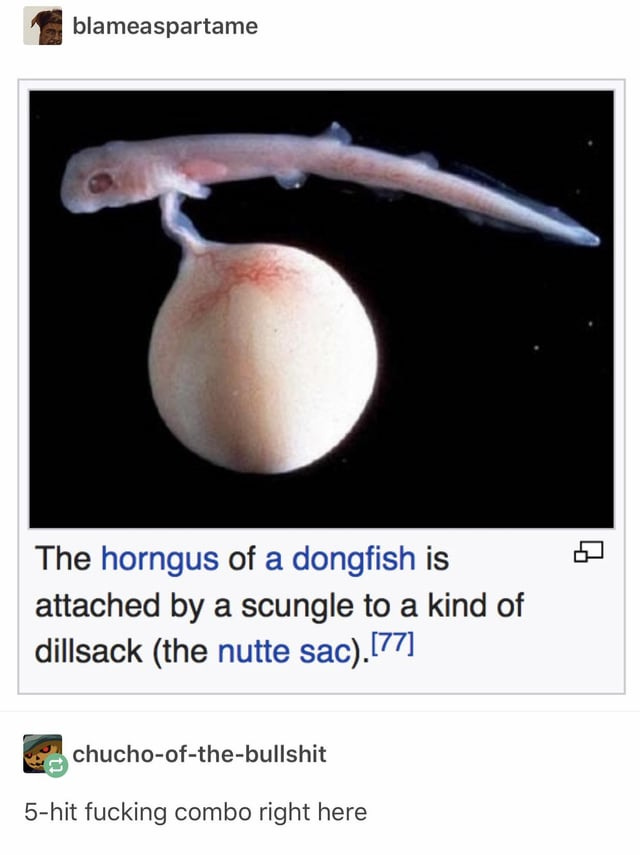
This is how I met Joel Cusumano, who specalized in a non-porn account called blameaspartame. One of his specialities is wading into the deepest darkest recesses of Facebook groups and other online communities. Many are lost to the recesses of time but some can be found via reposts.

Sometimes you know people because of a very dumb thing even though they are not dumb at all, but actually in fact, smart.
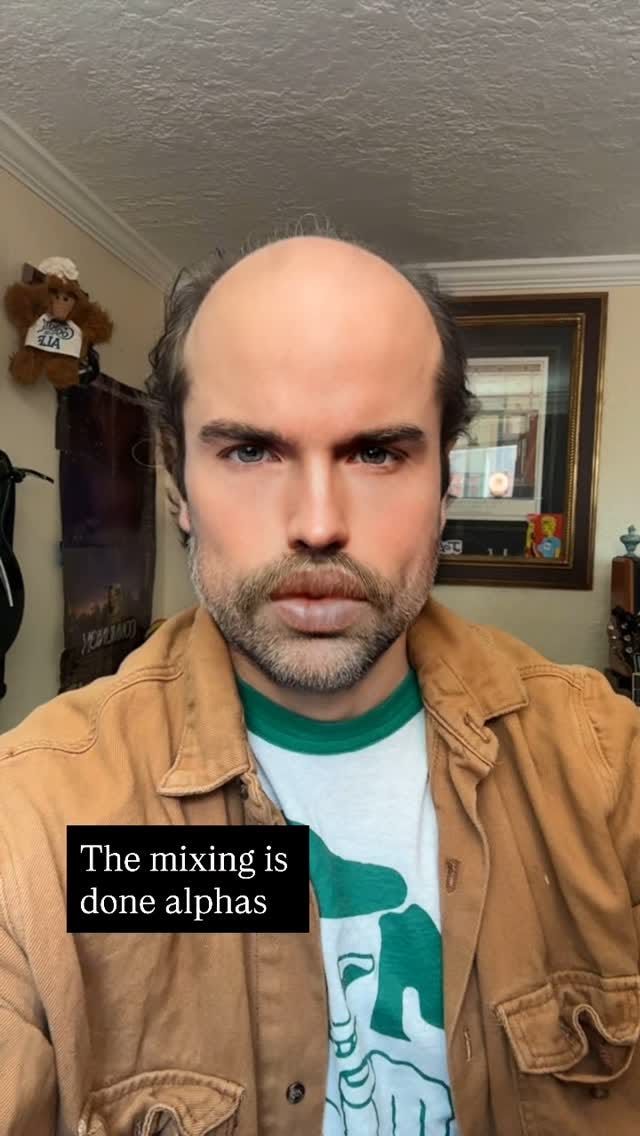
I met Joel on journeys to the Bay Area, and learned he’s also a great musician. I have seen a few different bands of his, from DSTVV to Cocktails. Take a listen to the kind of music Joel likes and if it’s up your alley, you may enjoy his new record coming out this October. The mixing is done alphas":
These selections kick ass and includes ones of my all-time favorites Jun Togawa. Take it away, Joel—you are better at this than I am:
Apogee & Perigee - “月世界旅行”
tr: “A Trip to the Moon” (1984)
I’ve been a Yellow Magic Orchestra head since college, but only recently deep Youtube-holed the three members’ individual careers. It’s an embarrassment of riches well worth your time. I looked up any writing or producing credit listed on Discogs and hunted each down on YouTube. Of the three, I was probably most impressed with Haruomi Hosono’s writing and production work for other artists. The Apogee & Perigee one-off album is one of the weirder things he produced. It’s a collaboration with singer Jun Togawa (they also worked on her project Guernica). I gather from this Reddit post that the album is sung from the point of view of two robots programmed to love each other and escape fascist earth to teach future generations about love. Great concept, though these days we’ve learned the robots will be playing for the other team.
Failure - “Stuck on You”
I essentially listened to whatever my parents listened to (mostly oldies and adult contemporary) until 7th grade in 1995, when I decided to dive into the music of my peers: Alternative rock, baby. I have a serious fondness for the alt-rock singles of the mid-’90s, though I’d be the first to admit it wasn’t rock’s most artistically seismic moment. Somehow, despite me being pretty glued to the alternative radio station at the time, I missed “Stuck on You”, a minor alt chart hit, but I heard it recently and love it. I think it has an element that rips off The Smashing Pumpkins’ “Today”, to great effect (steal things that work, kids!).
Now this kind of music is called “classic rock”, isn’t that depressing? I’m old, buddy. There’s a strictly informative doc on Failure that was released this summer called Every Time You Lose Your Mind that features some of the most egregious amount of unrelated talking head appearances since that Sparks doc: Rick Beato, Tommy Lee, Margaret Cho, Jason Schwartzman, Hayley Williams—you know, all the people who were there with the band at the time! How am I supposed to know what to think about a band until my favorite celebrities tell me they’re good??
Fabrizio de André - “Un matto (Dietro ogni scemo c'è un villaggio)”
tr: “A Madman (Behind Every Fool There’s a Village)”
De André is one of those artists with a crazy ratio of monumental stature in his homeland to obscurity in the Anglosphere. It’s maybe hard to fully appreciate his genius without speaking Italian. I‘m knocked out by “Un Matto”’s opening verse; I just have to write it out here (English translation mine):
Tu prova ad avere un mondo nel cuore (You try to keep a world in your heart)
E non riesci ad esprimerlo con le parole (And you’re not able to express it in words)
E la luce del giorno si divide la piazza (And the light of the day divides the piazza)
Tra un villaggio che ride, e te, lo scemo che passa (Between a village that laughs, and you, the fool who passes by)
E neppure la notte ti lascia da solo (And not even the night leaves you alone)
Gli altri sognan sé stessi, e tu sogni di loro (The others dream of themselves, and you dream of them)
I’ve been listening to de André’s music for a while, but as my Italian improves, I have a whole new experience with him. Listening to lyrics in a new language is puzzle solving. De André was a poet of the underdog, the outsider, which draws me to his work as someone who’s always felt an alien in my own culture, and frequently in my own head. “Un Matto” is from his 1970 album Non al denaro non all'amore nè al cielo, which is based on Edgar Lee Masters’ Spoon River Anthology. The album followed 1970’s La buona novella (The Good Novel) (1970), a concept album narrating a humanistic portrait of Jesus, and was followed by 1973’s decidedly left-wing Storia di un impiegato (Story of a Worker). All three are fantastic, and recommended starting points for de André.
Franco Battiato - “Il re del mondo”
tr: “The King of the World”
Tip: The heads just call him Battiato. He began his career as a pop singer-songwriter in the late ‘60s (see “La torre”), came into his own in the early ‘70s as a (for lack of better comparison due to his singularity) Eno-adjacent experimentalist (check out the fantastic Fetus (1971) and Pollution (1972)), then emerged as a new wave “pop” (I’d say really art-rock) star in Italy in the late ‘70s/early ‘80s. Besides producing and writing and producing songs at that time for other Italian artists (such as Alice’s “Per Elisa”, Giuni Russo’s “Atmosfera”, and Milva’s “Alexanderplatz”), he released a brilliant string of 10/10 albums that kick off with L'era del cinghiale bianco (The Age of the White Boar) (1979) and end with L'arca di Noè (Noah’s Ark) (1982). His music of this period includes his haunting, breathy vocals, drumming that sounds equally influenced by prog and new wave, the violin from frequent collaborator Giusto Pio, and a dense array of lyrical references that require Wiki citations. Like the best songwriters, there’s a layer of mystery to what exactly he’s on about, but the drama of the music bridges the bewilderment. From the second verse:
Nei vestiti bianchi a ruota (In the white flared dresses)
Echi delle danze sufi (Echoes of Sufi dances)
Nelle metro giapponesi oggi (In the Japanese metros today)
Macchine d'ossigeno (Oxygen machines)
Più diventa tutto inutile (The more useless everything becomes)
E più credi che sia vero (The more real you believe it to be)
E il giorno della fine non ti servirà l'inglese (And on the final day you won’t need English)
Again, as an outsider, someone who can easily feel alienated even in a room full of friends, I’ve always used music to make me feel sane and at home. When I was a lonely teenager, records by bands like The Undertones and Cheap Trick were my soundtrack. Now, though I still adore all the raucous music of my youth, it tends to be more pensive fare like Battiato and de André that relieve my isolation. In the past few years, I underwent treatment at a mental hospital, and later experienced the painful end of a romantic relationship—and my soundtrack hasn’t so much been angry lovelorn guitar rock, but Battiato, and his art-pop songs about long dead Italian newspaper editors and the Russian Revolution. My life, my personality, my tastes, surrender to an unrelenting forward movement, but still I labor obsessively to unlock the past, which to me remains far more mysterious than the future.
Tamao Koike - “鏡の中の十月”
tr: “October in the Mirror” (1983)
Another Yellow Magic Orchestra-produced gem that I can find just about nothing about. It’s always stunning to find something so fantastic that seems to have been barely released. I gather Tamao Koike was a model with a very brief recording career; this is the only release I see listed on Discogs other than a recent comp (she also appeared in a video for Yukihiro Takahashi’s fantastic Neuromantic album). The session that produced the melancholic “October in the Mirror” also produced a cool cover of Sly & the Family Stone’s “Runnin’ Away”.
THE GOLD STANDARD
Talk Talk - “Life’s What You Make It”
The Colour of Spring appears in the exact center of Talk Talk’s discography, and I know it is hipper to prefer subsequent releases, but this is the one for me. The takeoff point of a group mutating from solid but unremarkable pop band into avant-garde abstruseness. “Life’s What You Make It” is heavy without heaviness, it’s immediately accessible and funky and weird, it says so much by saying so little. Reading the lyrics on the page you could mistake them for a Hallmark card, but the effect in the music is haunting. Pop writers should never forget that one is primarily communicating musically and emotionally, not textually. Brilliant example of that.